
.jpg)
Transmission Line Rebuild Foundation Assessment
USA
TDR, Foundation testing
Transmission Utility
All works completed in-house
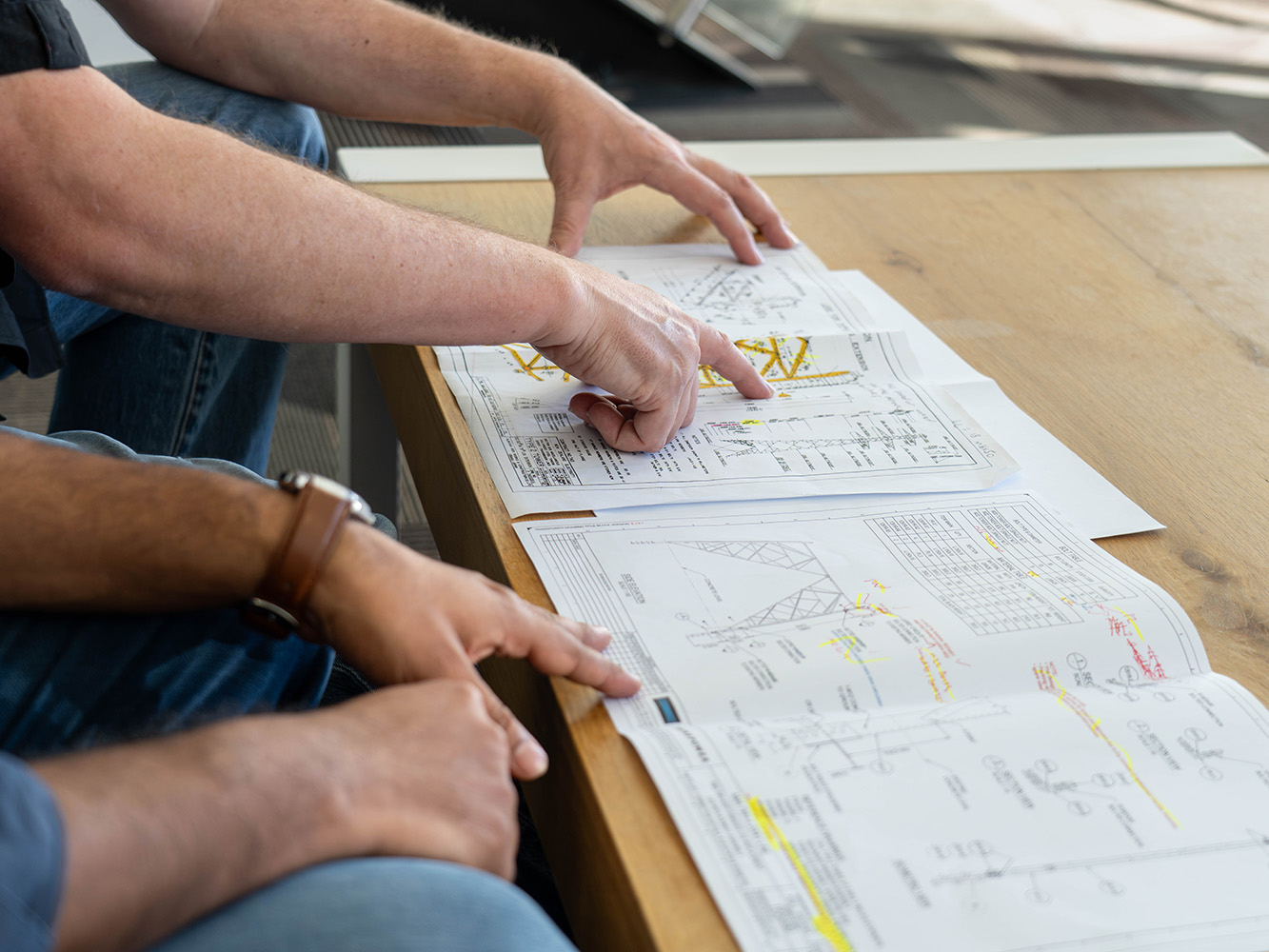
When rebuilding ageing transmission lines, the default assumption that all foundations must be replaced often leads to unnecessary cost, extended construction programmes, and avoidable ground disturbance, particularly in sensitive or accessconstrained locations.
Capital replacement programmes for ageing transmission assets frequently treat foundations as a like-for-like replacement item alongside the superstructure. In practice, foundations are often in serviceable condition long after the structures above them have reached end of life. Without objective condition data gathered before design is finalised, asset owners cannot justify foundation reuse in business cases or regulatory filings, and the opportunity to reduce scope, cost, and environmental impact is lost.
Groundline surveys representative foundations non-destructively using TDR before design is finalised, then compares assessed capacity against proposed structure loading to determine on a per-structure basis whether foundations should be reused, retrofitted, or replaced.
TDR testing produces high-fidelity impedance profiles that reveal belowgrade foundation conditions without excavation or disruption. Load-capacity comparisons are then carried out using soil and geometry data to calculate the structural demands of the proposed replacement structures against the verified capacity of each existing foundation. Engineering design packages are delivered on a perstructure basis, covering reuse, retrofit, or full replacement, and consolidated into a capital justification support package suitable for use in project business cases and regulatory filings where applicable.
Asset owners can confidently justify foundation reuse in capital programmes, reducing civil works scope, accelerating construction schedules, and minimising ground and habitat disturbance in environmentally sensitive or access-constrained areas.
By establishing foundation condition before design is locked, Groundline gives asset owners the evidence base needed to challenge the default replacement assumption and defend scope reductions with engineering rigour. Foundations confirmed as viable for reuse avoid the cost, time, and environmental impact of full replacement, while those genuinely requiring intervention are identified early and designed for efficiently. The result is a more targeted, cost-effective rebuild strategy backed by verified data rather than conservative assumption.


2/155 Blenheim Road,
Riccarton,
Christchurch 8041
1 SE Ocean Blvd
Stuart, FL 34994
Geneva Building 2,
Lake View Drive,
Nottinghamshire
NG15 0ED







Copyright ©2026 Groundline Engineering Ltd. All rights reserved
Groundline Engineering Limited | Registered Office: 2-4 Packhorse Road, Gerrards Cross, Buckinghamshire, England, SL9 7QE. | Registered in England and Wales No. 08893929 | VAT No. GB 221 4674 30.